
 Editions
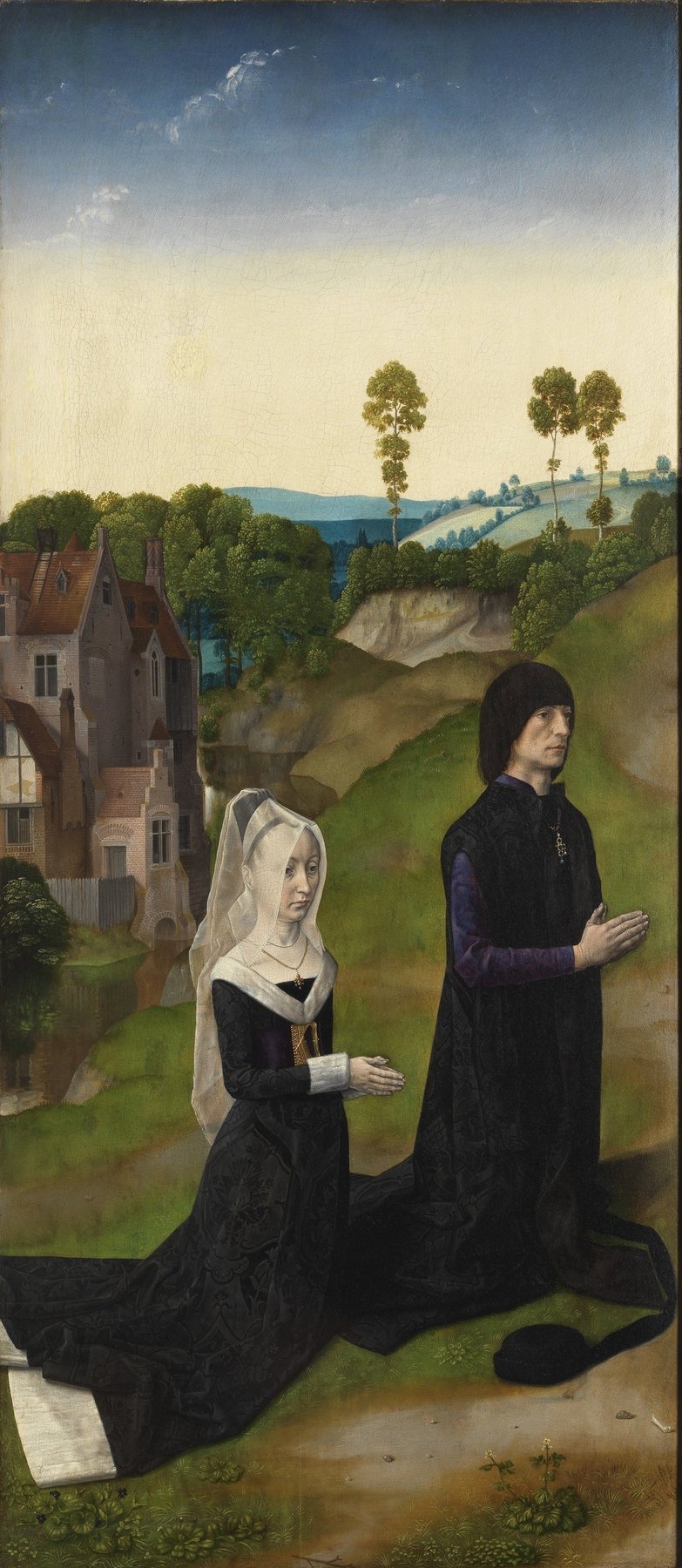
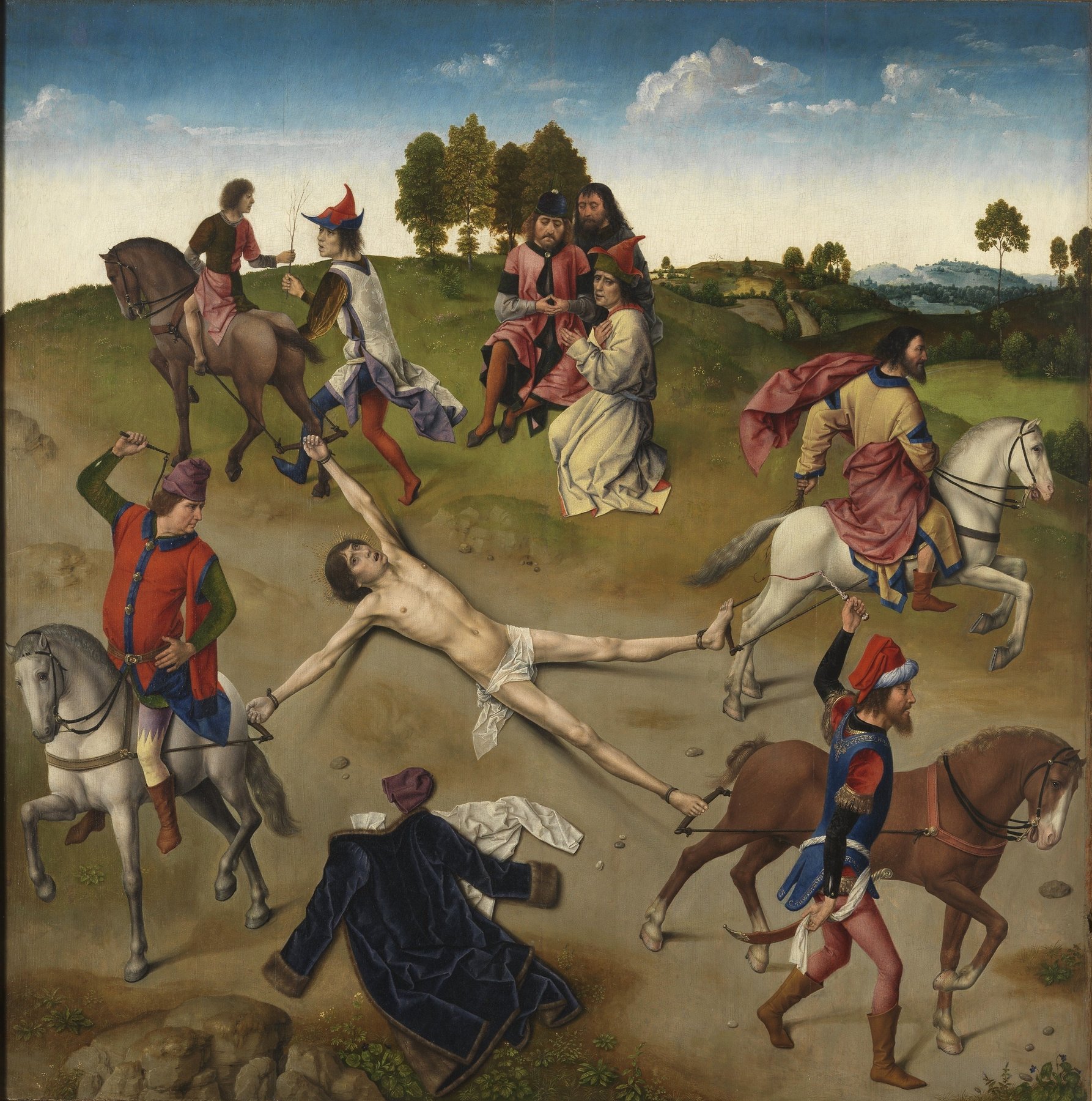
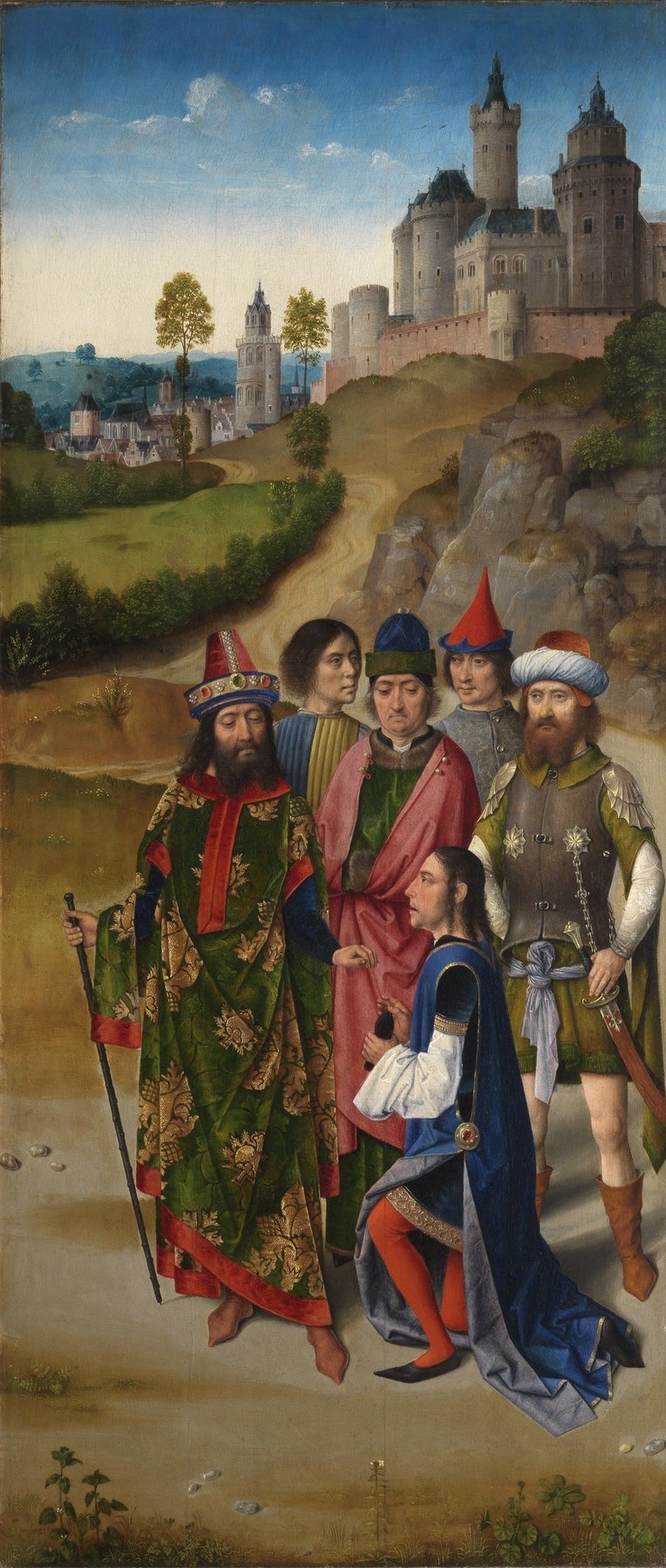
Triptych of the Martyrdom of St Hippolytus
Sizes
One object, sold whole, as St Salvator's Cathedral, Bruges shows it. 3 sheets, one edition, $399 — the printed panels hang level within 0.0%.
Send as a gift
A printed card goes in the parcel with your message and the work’s museum record. No price is shown anywhere in the parcel. Enter the recipient’s address at checkout.
0 / 240Have a gift certificate?
The certificate’s balance is applied at checkout; any remainder is paid there. Check a balance or buy one.
Four horses pull four ways, and a rope runs from each to a man's wrist or ankle. Jos Koldeweij describes each horse facing one corner, its rider apparently just given the signal. The man in the middle is Saint Hippolytus, and Koldeweij observes that he was given the features of Hippolyte de Berthoz, who ordered the triptych, so that patron and namesake share one body. On the left wing, whose completion with the donors' portraits Koldeweij attributes to Hugo van der Goes, De Berthoz and his wife, Elisabeth Hugheins, kneel with joined hands before a moated country house. Dieric Bouts painted the martyrdom about 1470-75, and Van der Goes finished the work about 1475-79. In Koldeweij's reading the patron kneels quietly in one field and is pulled four ways in the next.
The panels hang in a row at one image height; the hung images measure about 44.4 in across, before any gap between frames.
| Held by | St Salvator's Cathedral, Bruges (in situ) · S.S.004 the museum’s record |
|---|---|
| Source file | Wikimedia Commons · Dieric Bouts & Hugo van der Goes - Triptiek van de Heilige Hippolytus.jpg |
| Licence | Public domain |
| Panel · left | Triptych of the Martyrdom of St Hippolytus (left wing) — 1,878 × 4,316 px |
| Panel · centre | Triptych of the Martyrdom of St Hippolytus (centre panel) — 4,245 × 4,278 px |
| Panel · right | Triptych of the Martyrdom of St Hippolytus (right wing) — 1,830 × 4,309 px |
| Chain | Each panel taken from the source file above and cut to its own painted field; held as 3 print masters. |
Printed on demand as one edition. The whole image is printed on every sheet — never cropped to fit — so each panel carries an archival margin.