
 Editions
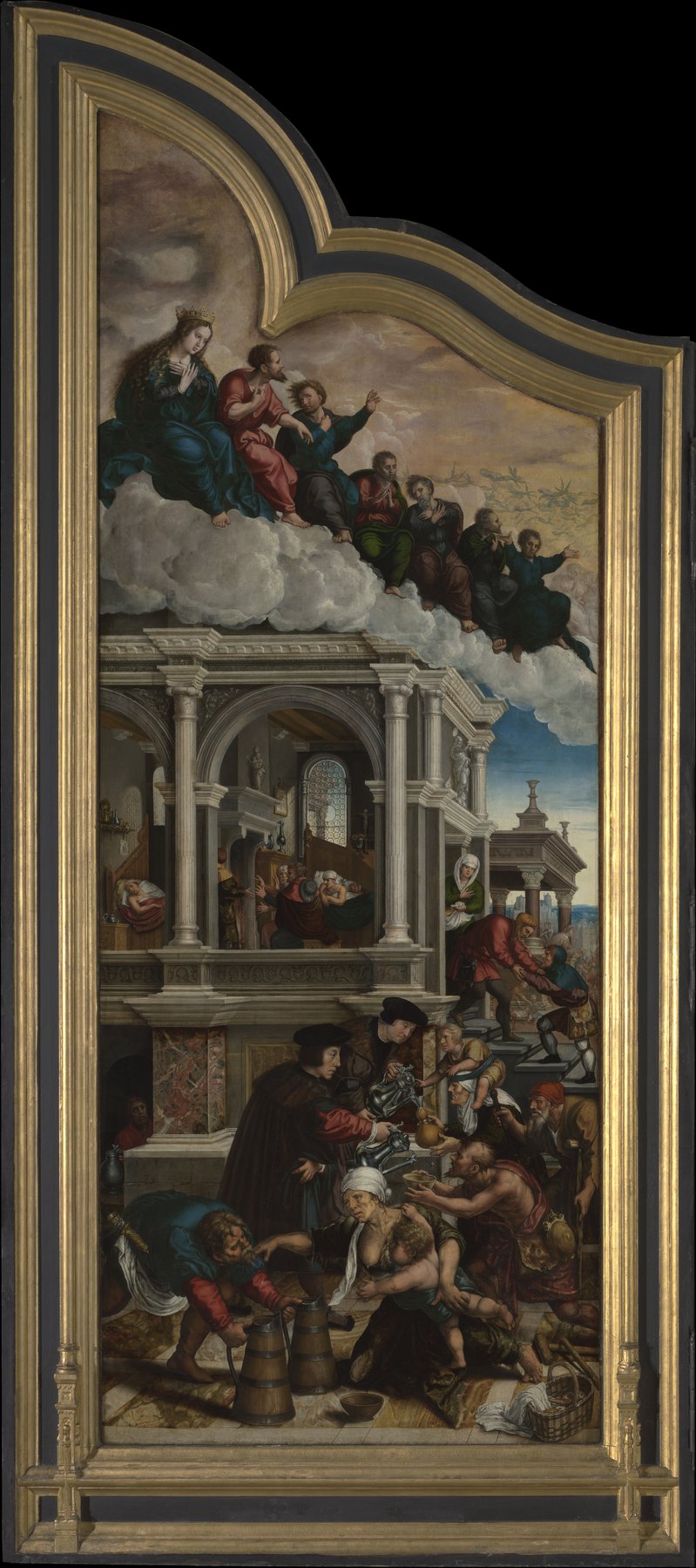
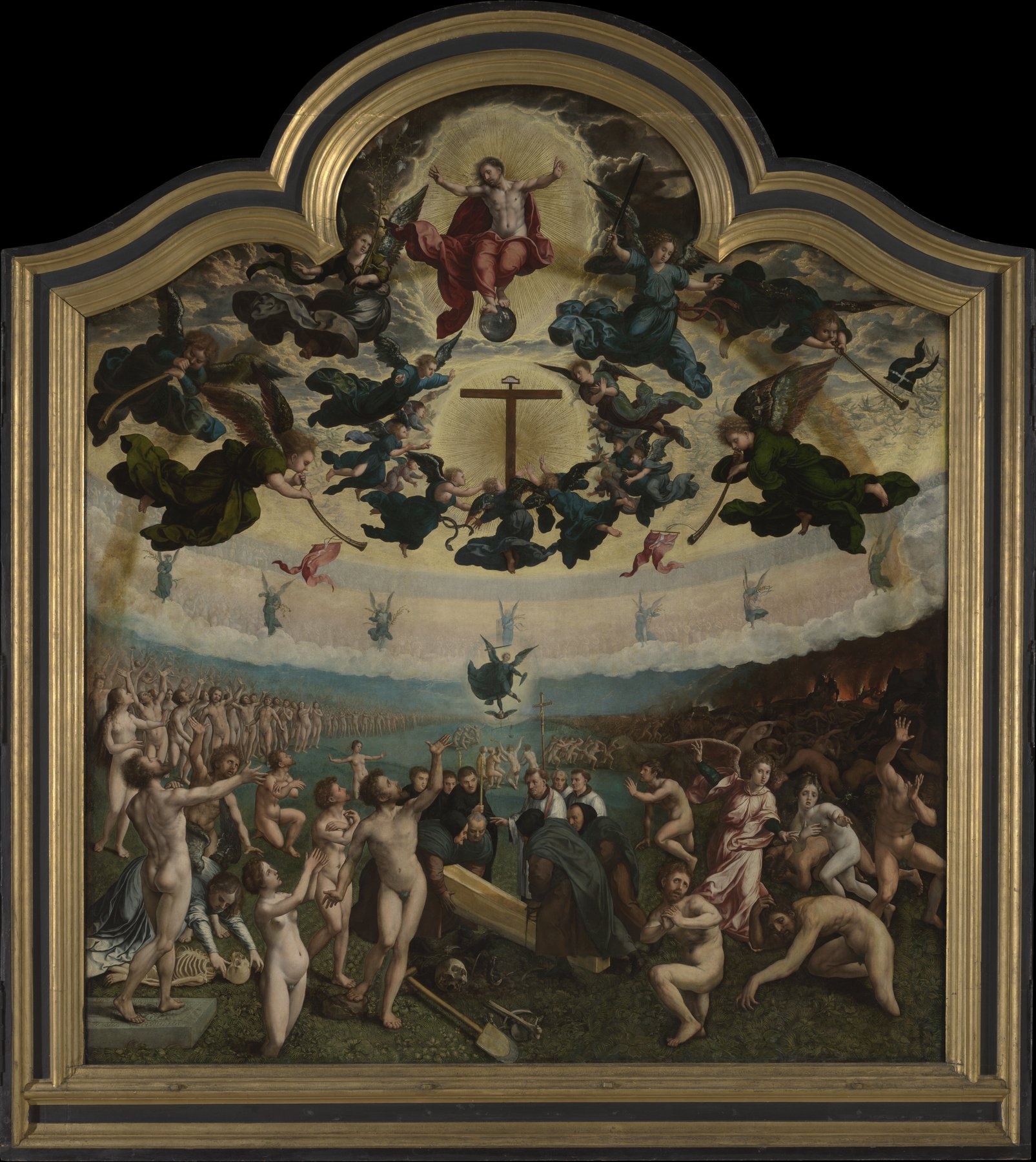
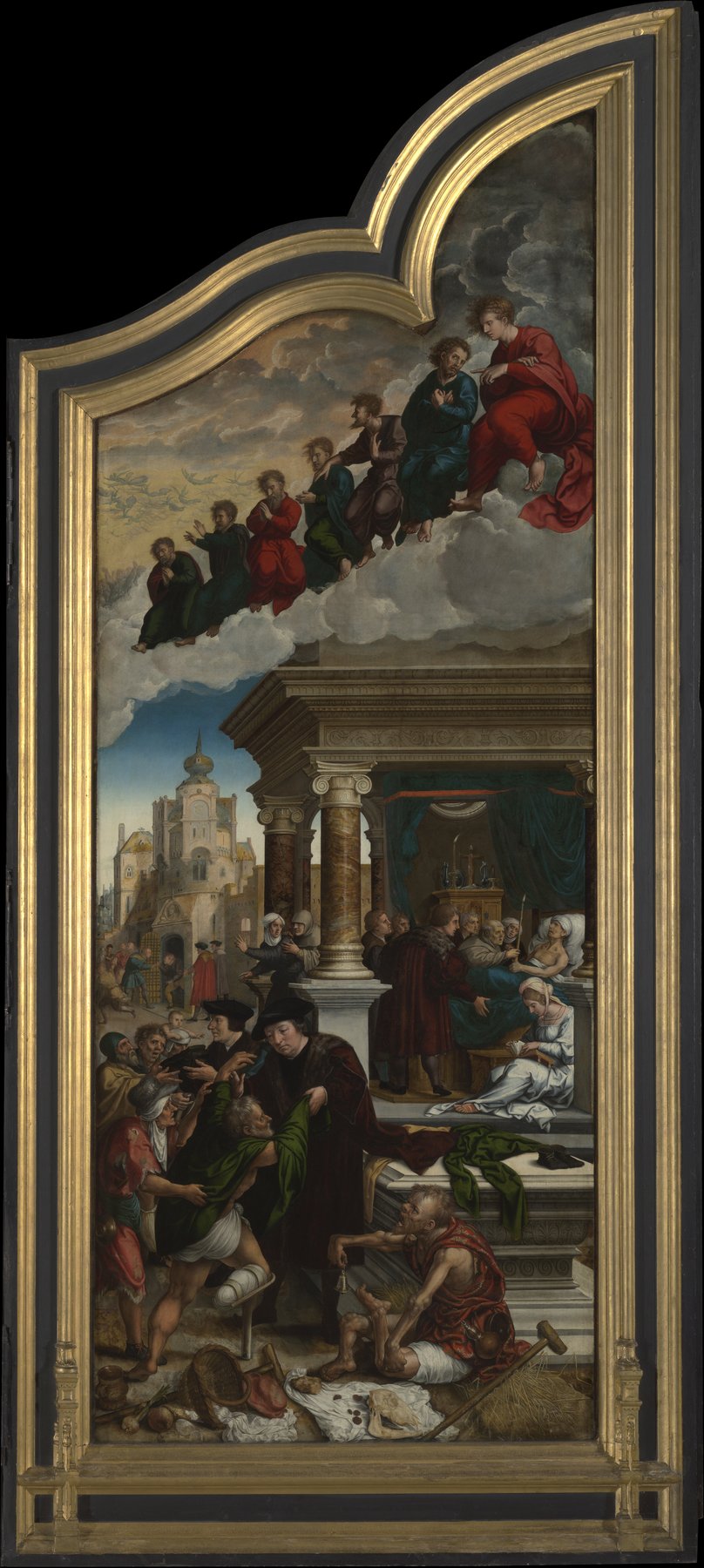
The Last Judgment and the Seven Works of Mercy
Sizes
One object, sold whole: KMSKA (Koninklijk Museum voor Schone Kunsten Antwerpen) holds it as 741-745. 3 sheets, one edition, $299 — the printed panels hang level within 0.5%.
Send as a gift
A printed card goes in the parcel with your message and the work’s museum record. No price is shown anywhere in the parcel. Enter the recipient’s address at checkout.
0 / 240Have a gift certificate?
The certificate’s balance is applied at checkout; any remainder is paid there. Check a balance or buy one.
Christ sits on a globe with His arms raised, and far below Him, among the rising dead, men in black lower a coffin into the ground. Matthew's Gospel names six works of mercy; Bernard van Orley paints seven. The KMSKA explains that those who performed them could be confident of their place in Heaven, and that the triptych was painted for Antwerp's Chamber for Poor Relief. The left wing gives drink to the thirsty, food to the hungry, a roof to the homeless. The right wing brings clothes to disabled beggars and visits a sick man and prisoners. Burial, the seventh, was one of the deeds of Tobit, who was careful to bury the dead. Van Orley sets it in the centre with the Judgment itself, where the KMSKA records an inscription at lower left beginning HIC JACET. Over the grave the trumpets are already sounding.
The three panels hang in a row at one image height; the hung images measure about 33.3 in across, before any gap between sheets.
| Held by | KMSKA (Koninklijk Museum voor Schone Kunsten Antwerpen) · 741-745 the museum’s record |
|---|---|
| Source file | iiif.kmska.be |
| Licence | Public domain |
| Panel · left | The Last Judgment and the Seven Works of Mercy (left wing) — 9,837 × 25,807 px |
| Panel · centre | The Last Judgment and the Seven Works of Mercy (centre panel) — 18,903 × 21,106 px |
| Panel · right | The Last Judgment and the Seven Works of Mercy (right wing) — 9,883 × 25,909 px |
| Chain | Each panel taken from the source file above and cut to its own painted field; held as 3 print masters. |
Sources
- KMSKA, Antwerp, 'Last Judgement and the Seven Acts of Mercy', inv. 741-745, read 2026-09-24
- KMSKA, 'The Last Judgement and the Seventh Act of Mercy: Burying the Dead', inv. 741, read 2026-09-24
- Matthew 25:35-36, Douay-Rheims (Challoner), project corpus data/bible_drc.js, read 2026-09-24
- Tobit 1:20, Douay-Rheims (Challoner), project corpus data/bible_drc.js, read 2026-09-24
Printed on demand as one edition. The whole image is printed on every sheet — never cropped to fit — so each panel carries an archival margin.