
Drag the print to move it. The painting is shown at true scale; where its shape differs from the sheet the print has a paper border, not drawn here. Prints are sold unframed, and a frame here is only for planning.
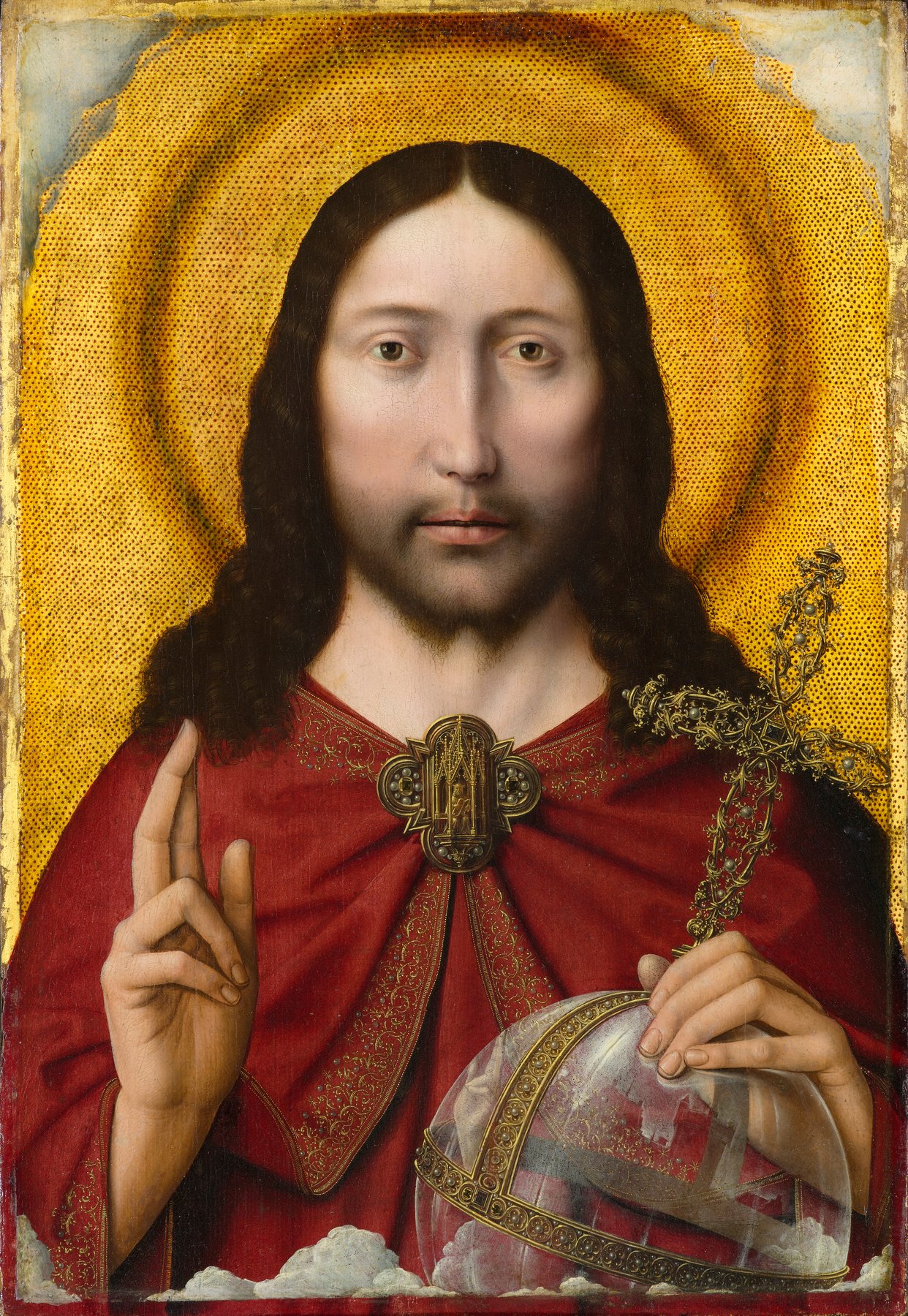
Christ as the Salvator Mundi
circa 1500–1510 · Oil on panel · North Carolina Museum of Art, Raleigh
Sizes
image 6.9×10 in on a 8×10 in sheet
What is dpi?
Dots per inch: how many pixels of the museum’s file go into each inch of paper. Our floor is 240 for sheets up to 20 inches, 180 up to 36 inches and 120 beyond, because a larger print is seen from further away. We never offer a sheet below the floor, and the number on each size is the one you receive.
Hahnemühle Photo Rag, 308 gsm cotton rag · pigment inks · printed to order
Printed to order · the whole painting, never cropped · if it arrives damaged, we replace it
Free shipping, included in the price, to all eight countries we ship to. Dispatched in 2–4 working days — nothing to send back if it arrives damaged.
Send as a gift
A printed card goes in the parcel with your message and the work’s museum record. No price is shown anywhere in the parcel. Enter the recipient’s address at checkout.
0 / 240Have a gift certificate?
The certificate’s balance is applied at checkout; any remainder is paid there. Check a balance or buy one.
Christmas: order by Monday 7 December for delivery in the United States before Christmas.
All editionsAbout this painting
A clear crystal orb sits under Christ's left hand, and the North Carolina Museum of Art points out what it holds: the reflection of His blessing hand, and an entire cityscape. The world He carries has a city in it, and His blessing is already inside. Two fingers of His right hand are raised; a gold cross rises from the orb; a clasp closes His red mantle at the throat, and a field of gold circles His head. The museum's label says the painter imitates gold, pearls and glass with the same brilliance. Attributed to Quinten Massys and painted in Flanders around 1500 to 1510, it came from a Spanish convent, passed through French and Company in New York to Samuel H. Kress in 1949, and was given to the museum in 1960. Look into the glass: the city there could be yours.