

Drag the print to move it. The painting is shown at true scale; where its shape differs from the sheet the print has a paper border, not drawn here. Prints are sold unframed, and a frame here is only for planning.
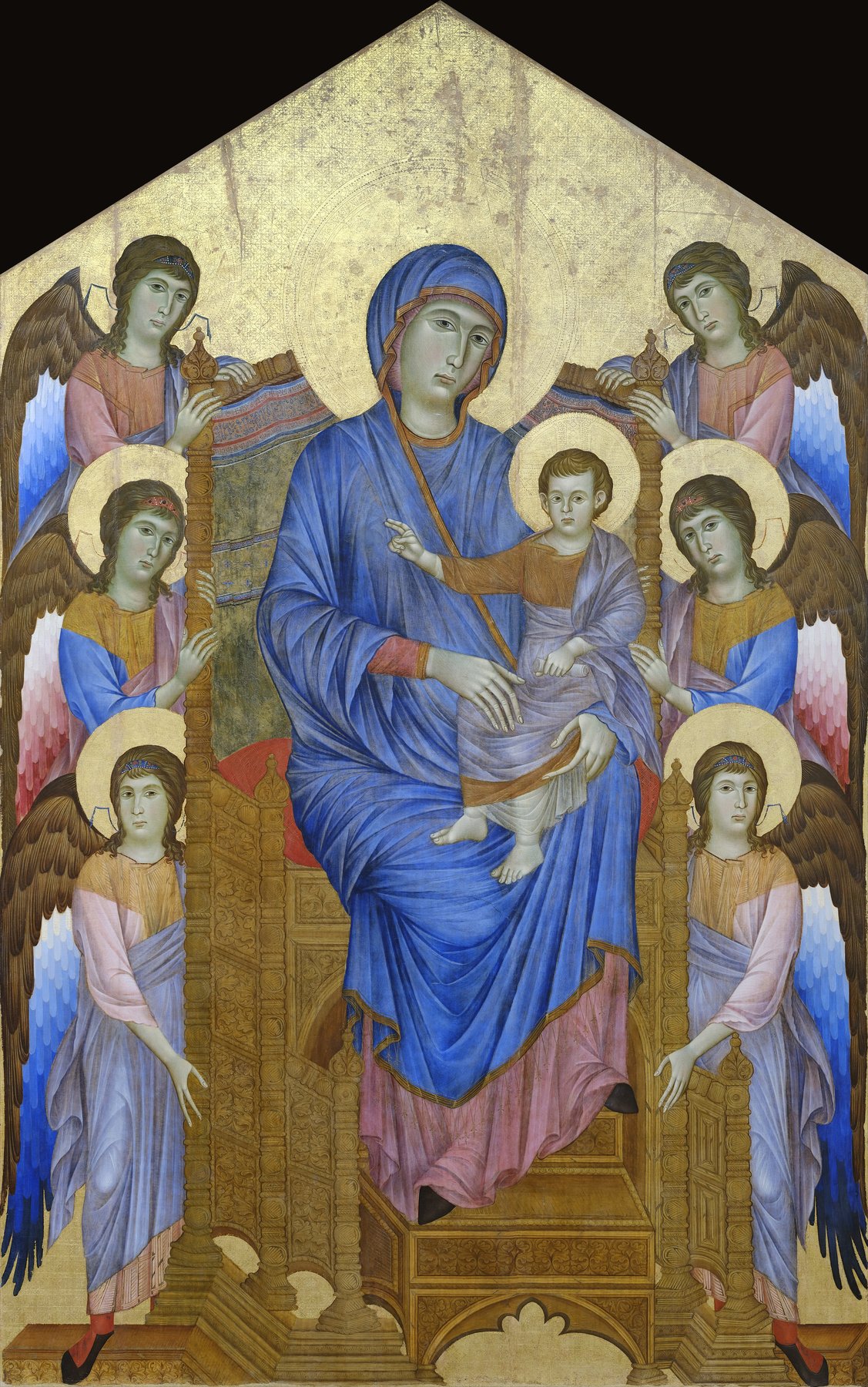
The Virgin and Child in Majesty Surrounded by Six Angels (Maestà)
1275–1300 · tempera sur fond d'or sur bois (peuplier) · Musée du Louvre, Paris
Sizes
image 15×24 in on a 18×24 in sheet
What is dpi?
Dots per inch: how many pixels of the museum’s file go into each inch of paper. Our floor is 240 for sheets up to 20 inches, 180 up to 36 inches and 120 beyond, because a larger print is seen from further away. We never offer a sheet below the floor, and the number on each size is the one you receive.
Hahnemühle Photo Rag, 308 gsm cotton rag · pigment inks · printed to order
Printed to order · the whole painting, never cropped · if it arrives damaged, we replace it
Free shipping, included in the price, to all eight countries we ship to. Dispatched in 2–4 working days — nothing to send back if it arrives damaged.
Send as a gift
A printed card goes in the parcel with your message and the work’s museum record. No price is shown anywhere in the parcel. Enter the recipient’s address at checkout.
0 / 240Have a gift certificate?
The certificate’s balance is applied at checkout; any remainder is paid there. Check a balance or buy one.
Christmas: order by Monday 7 December for delivery in the United States before Christmas.
All editionsAbout this painting
Our Lady sits on a great carved throne with the Christ Child on her knee, and both look out of the gold at whoever stands below. He blesses with two fingers raised and holds a scroll in His other hand; His feet are bare. Six angels attend the throne, three on each side, the upper four with their hands upon it. Cimabue painted it in tempera on a gold ground in the last quarter of the thirteenth century. The Louvre counts its frame as original, painted with twenty-six medallions of the Redeemer, archangels, prophets, the twelve Apostles and four Franciscan saints; this print keeps to the gold field within it. The altarpiece stood in San Francesco in Pisa until 1810 and came to the Louvre in 1812 by military conquest. The angels keep their hands on the throne, and the two faces above still look out over us.