

Drag the print to move it. The painting is shown at true scale; where its shape differs from the sheet the print has a paper border, not drawn here. Prints are sold unframed, and a frame here is only for planning.
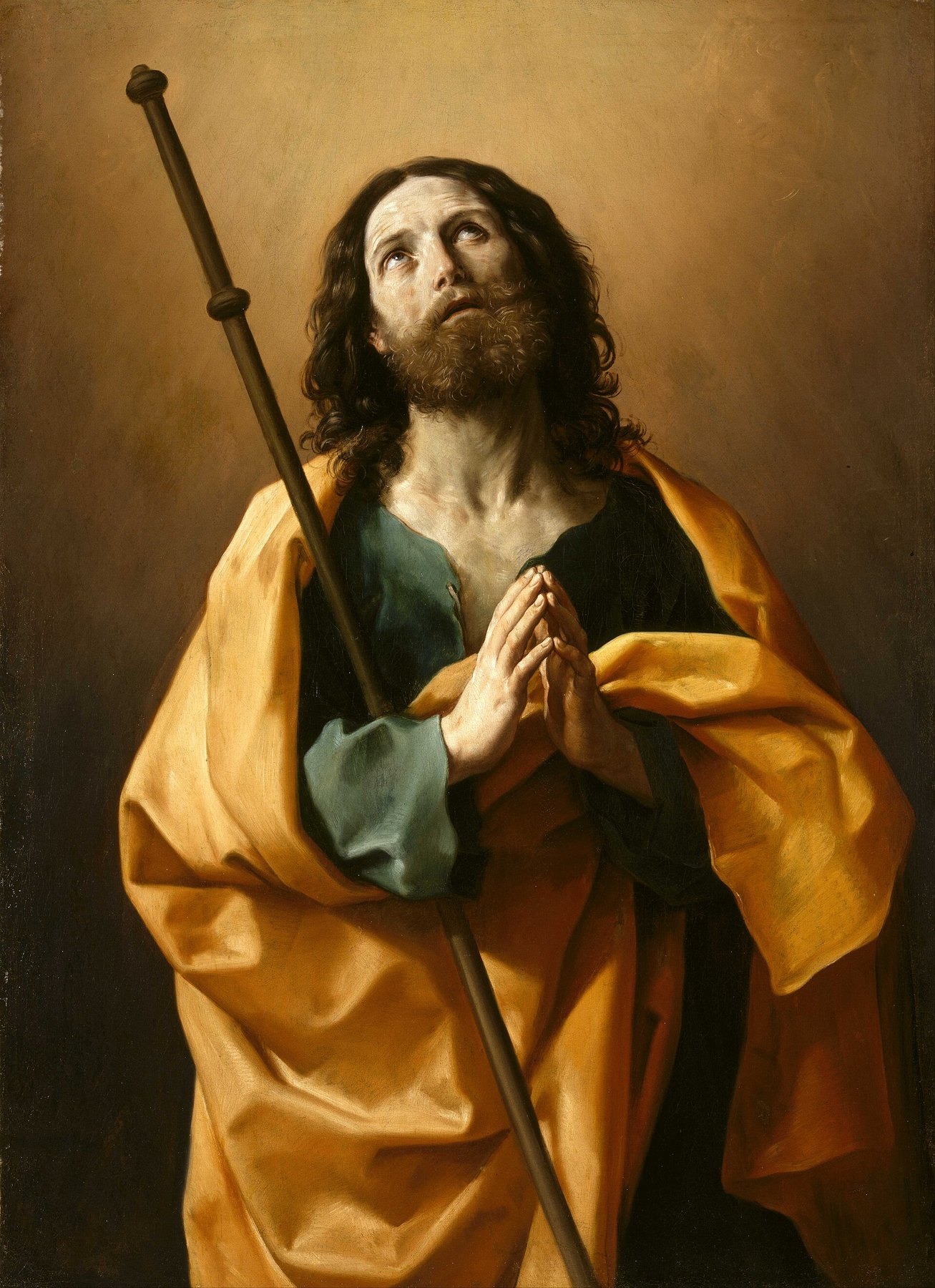
Saint James the Greater
c. 1636–1638 · Oil on canvas · The Museum of Fine Arts, Houston
For Saint James · 25 July
Sizes
image 14.5×20 in on a 16×20 in sheet
What is dpi?
Dots per inch: how many pixels of the museum’s file go into each inch of paper. Our floor is 240 for sheets up to 20 inches, 180 up to 36 inches and 120 beyond, because a larger print is seen from further away. We never offer a sheet below the floor, and the number on each size is the one you receive.
Hahnemühle Photo Rag, 308 gsm cotton rag · pigment inks · printed to order
Printed to order · the whole painting, never cropped · if it arrives damaged, we replace it
Free shipping, included in the price, to all eight countries we ship to. Dispatched in 2–4 working days — nothing to send back if it arrives damaged.
Send as a gift
A printed card goes in the parcel with your message and the work’s museum record. No price is shown anywhere in the parcel. Enter the recipient’s address at checkout.
0 / 240Have a gift certificate?
The certificate’s balance is applied at checkout; any remainder is paid there. Check a balance or buy one.
Christmas: order by Monday 7 December for delivery in the United States before Christmas.
All editionsAbout this painting
A staff, and nothing else. Guido Reni gives Saint James no shell, only the pilgrim's staff laid across his gold cloak, and turns his face upward with the hands joined. The Museum of Fine Arts, Houston reads the parted hair and beard as Christ's own: James was one of the three who saw that face shine on the mountain, and he wears it. The Prado's entry calls the Houston canvas the original of the Duke of Alcalá's Apostles, painted in Rome for the family pantheon at the Cartuja de las Cuevas in Seville. Benito Navarrete Prieto argues that the related canvas in the Prado is no Reni but a copy by Zurbarán, made around 1650-55 after he saw the duke's series in Seville. The fisherman who mended nets is looking up, and the staff is for a road.
Sources: MFAH object page, emuseum.mfah.org/objects/48081 · Museo Nacional del Prado, object entry, Santiago el Mayor, inv. P000212 · Benito Navarrete Prieto, "Reni y España," Archivo Español de Arte 97/386 (2024) · Matthew 17:1-2, Douay-Rheims (Challoner).
And going on from thence, he saw other two brethren, James the son of Zebedee, and John his brother, in a ship with Zebedee their father, mending their nets: and he called them.
Matthew 4:21 · Douay-Rheims (Challoner)