

Drag the print to move it. The painting is shown at true scale; where its shape differs from the sheet the print has a paper border, not drawn here. Prints are sold unframed, and a frame here is only for planning.
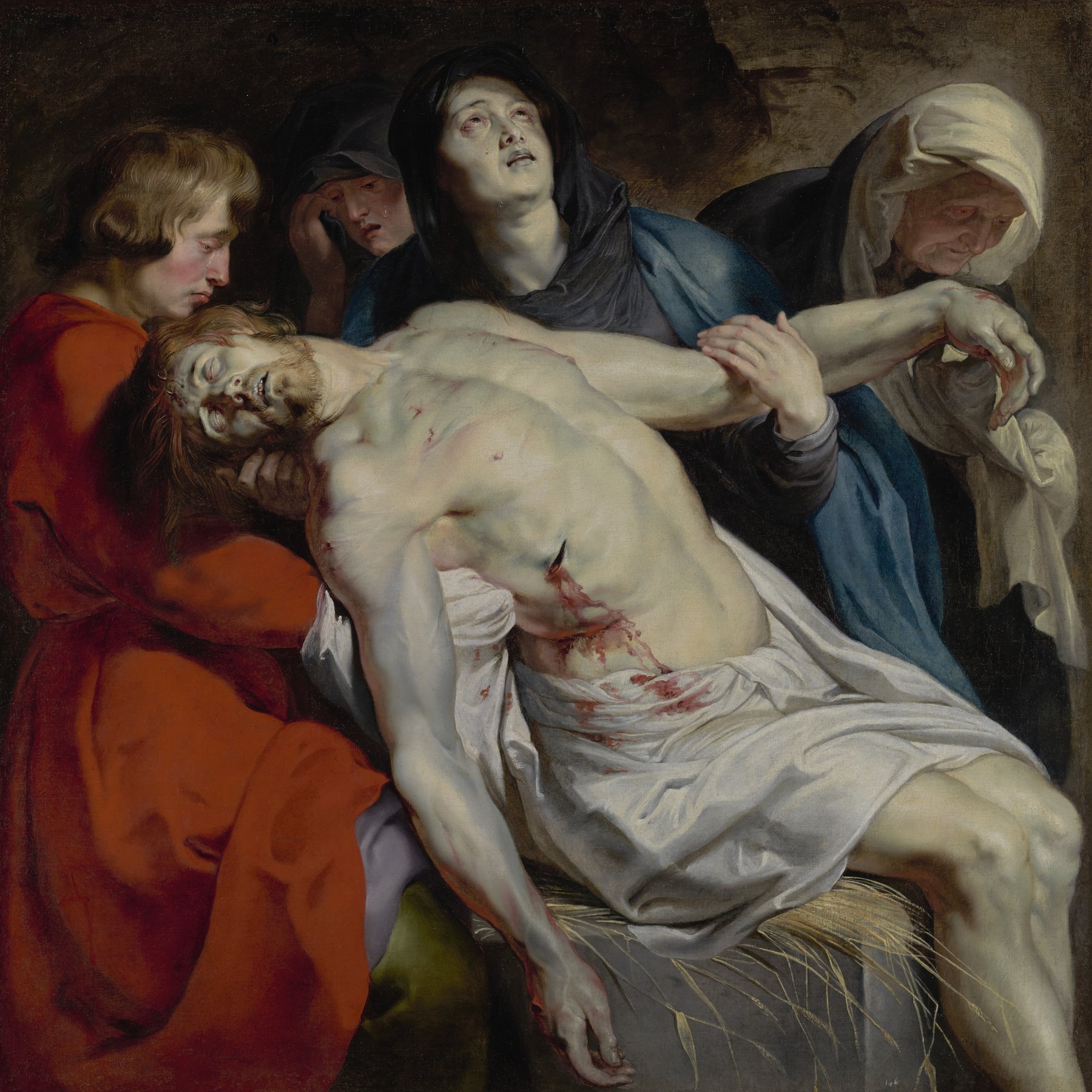
The Entombment
about 1612 · Oil on canvas · J. Paul Getty Museum, Los Angeles
Sizes
image 20×20 in on a 20×20 in sheet
What is dpi?
Dots per inch: how many pixels of the museum’s file go into each inch of paper. Our floor is 240 for sheets up to 20 inches, 180 up to 36 inches and 120 beyond, because a larger print is seen from further away. We never offer a sheet below the floor, and the number on each size is the one you receive.
Hahnemühle Photo Rag, 308 gsm cotton rag · pigment inks · printed to order
Printed to order · the whole painting, never cropped · if it arrives damaged, we replace it
Free shipping, included in the price, to all eight countries we ship to. Dispatched in 2–4 working days — nothing to send back if it arrives damaged.
Send as a gift
A printed card goes in the parcel with your message and the work’s museum record. No price is shown anywhere in the parcel. Enter the recipient’s address at checkout.
0 / 240Have a gift certificate?
The certificate’s balance is applied at checkout; any remainder is paid there. Check a balance or buy one.
Christmas: order by Monday 7 December for delivery in the United States before Christmas.
All editionsAbout this painting
A sheaf of wheat lies on the stone beneath the body of Christ, and the J. Paul Getty Museum reads it plainly: it “stands for the bread used in communion, which represents Jesus’s body.” The stone slab, the museum adds, looks like an altar, and the canvas was probably made to hang above an altar in a small church chapel. Saint John the Evangelist, in a bright red robe, holds up the heavy body. Behind him Saint Mary Magdalene weeps with her hand to her face; at the right another Mary bends over the pierced hand. Our Lady lifts her eyes to heaven, tears on her cheek and her hands on her Son's arm, and the wound in His side is still bleeding. Rubens painted it about 1612 and, the Getty says, “wanted people looking at this painting to feel like they were really there.” The wheat is laid out for us.
Sources: J. Paul Getty Museum, Collection, 'The Entombment', 93.PA.9, read 2026-10-10. · J. Paul Getty Museum, Education, 'Explore The Entombment', read 2026-10-10.
Now there was in the place where he was crucified a garden: and in the garden a new sepulchre, wherein no man yet had been laid.
John 19:41 · Douay-Rheims (Challoner)