

Drag the print to move it. The painting is shown at true scale; where its shape differs from the sheet the print has a paper border, not drawn here. Prints are sold unframed, and a frame here is only for planning.
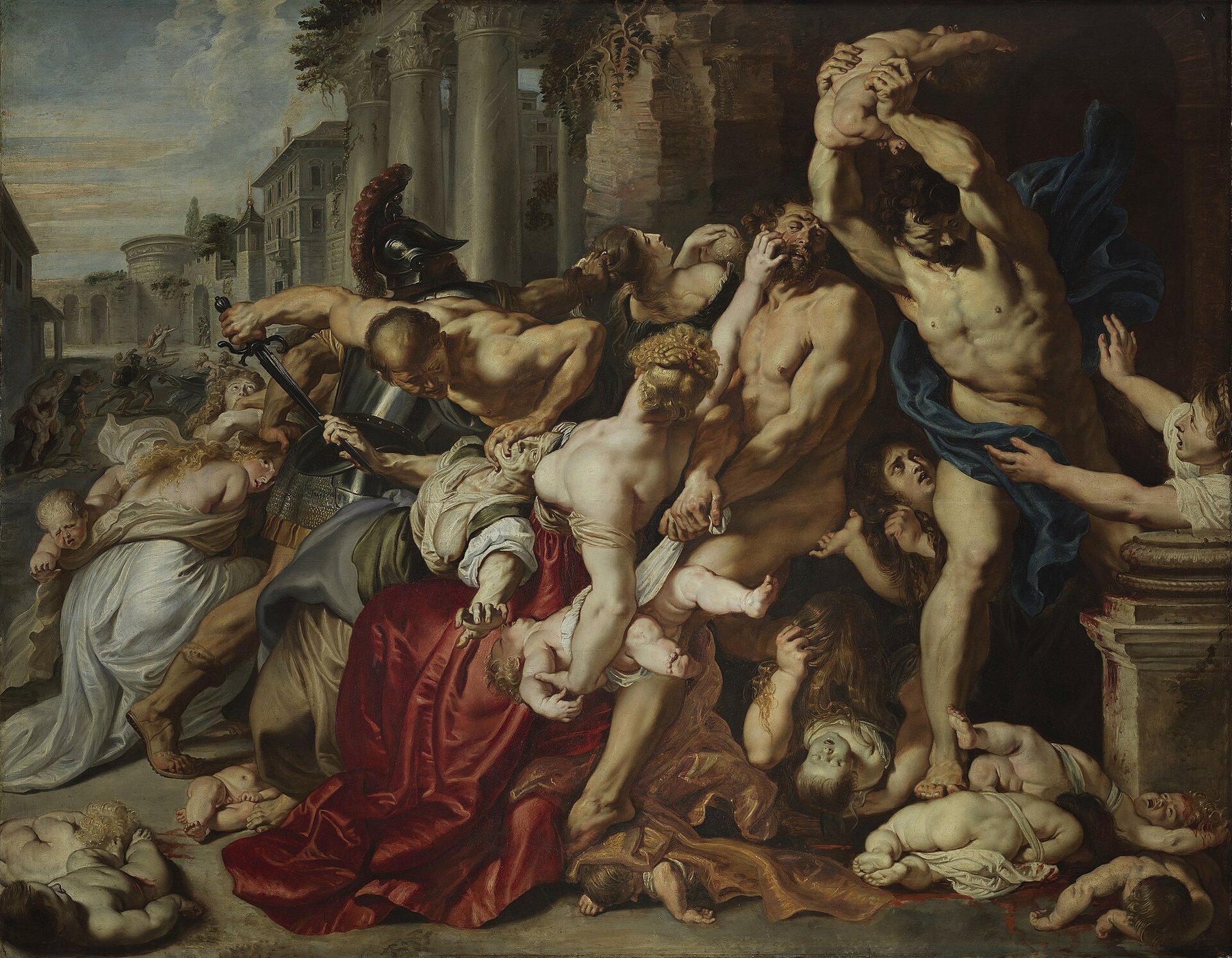
The Massacre of the Innocents
c. 1611–1612 · Oil on panel · Art Gallery of Ontario
For the Holy Innocents · 28 December
Sizes
image 10×7.8 in on a 10×8 in sheet
What is dpi?
Dots per inch: how many pixels of the museum’s file go into each inch of paper. Our floor is 240 for sheets up to 20 inches, 180 up to 36 inches and 120 beyond, because a larger print is seen from further away. We never offer a sheet below the floor, and the number on each size is the one you receive.
Hahnemühle Photo Rag, 308 gsm cotton rag · pigment inks · printed to order
Printed to order · the whole painting, never cropped · if it arrives damaged, we replace it
Free shipping, included in the price, to all eight countries we ship to. Dispatched in 2–4 working days — nothing to send back if it arrives damaged.
Send as a gift
A printed card goes in the parcel with your message and the work’s museum record. No price is shown anywhere in the parcel. Enter the recipient’s address at checkout.
0 / 240Have a gift certificate?
The certificate’s balance is applied at checkout; any remainder is paid there. Check a balance or buy one.
Christmas: order by Monday 7 December for delivery in the United States before Christmas.
All editionsAbout this painting
A soldier lifts a child over his head with both hands, and his body is borrowed. The Rubens House traces the pose to Christ in Michelangelo's Resurrection: the same body that rose from the tomb here deals death. Beside him a mother claws at another soldier's face, and behind her the house finds the Laocoön. Children lie on the paving under the columns. Rubens, just back from Italy, painted as a pictor doctus, a learned painter showing Antwerp what he had studied. Later the painting passed as the work of Jan van den Hoecke and hung unnoticed in a corridor of an Austrian monastery, until Sotheby's recognised it as Rubens weeks before the 2002 sale. Matthew gives it one sentence: Herod "killed all the menchildren that were in Bethlehem." Herod never appears. His soldiers do.
Sources: c. 1610, oil on panel, 142 × 183 cm, accession 2014/1581 · the soldier taken from Christ in Michelangelo's Resurrection, and the Laocoön behind the clawing woman; Rubens as pictor doctus just back from Italy · attributed to Jan van den Hoecke until Sotheby's identified it as Rubens weeks before the 2002 sale · it hung unnoticed in a corridor of an Austrian monastery before the sale
Then Herod perceiving that he was deluded by the wise men, was exceeding angry: and sending killed all the menchildren that were in Bethlehem, and in all the borders thereof, from two years old and under, according to the time which he had diligently inquired of the wise men.
Matthew 2:16 · Douay-Rheims (Challoner)