

Drag the print to move it. The painting is shown at true scale; where its shape differs from the sheet the print has a paper border, not drawn here. Prints are sold unframed, and a frame here is only for planning.
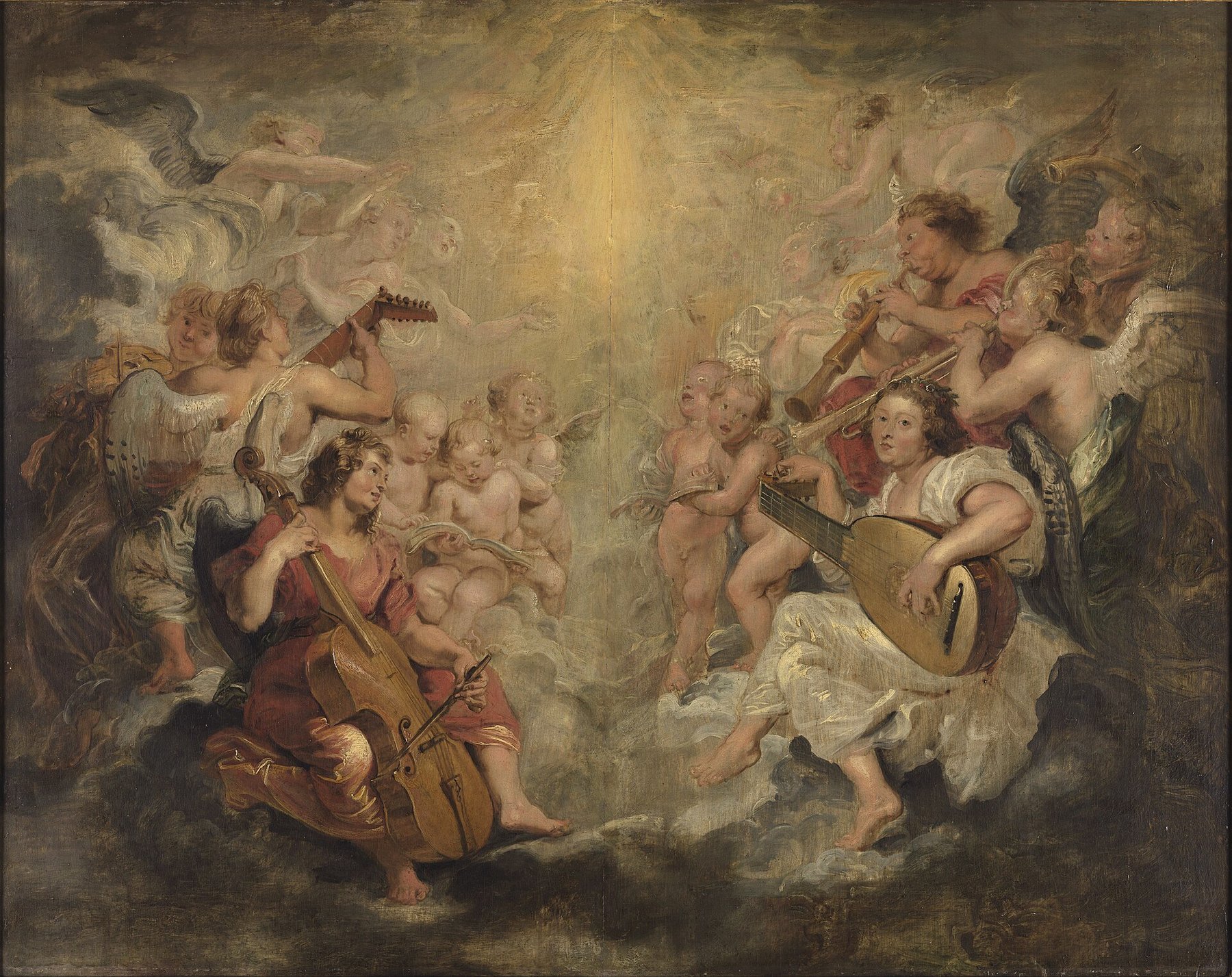
Music-Making Angels
c. 1628 · Öl auf Holz (oil on wood) · Stiftung Preußische Schlösser und Gärten Berlin-Brandenburg — Bildergalerie Sanssouci
Sizes
image 22.7×18 in on a 24×18 in sheet
What is dpi?
Dots per inch: how many pixels of the museum’s file go into each inch of paper. Our floor is 240 for sheets up to 20 inches, 180 up to 36 inches and 120 beyond, because a larger print is seen from further away. We never offer a sheet below the floor, and the number on each size is the one you receive.
Hahnemühle Photo Rag, 308 gsm cotton rag · pigment inks · printed to order
Printed to order · the whole painting, never cropped · if it arrives damaged, we replace it
Free shipping, included in the price, to all eight countries we ship to. Dispatched in 2–4 working days — nothing to send back if it arrives damaged.
Send as a gift
A printed card goes in the parcel with your message and the work’s museum record. No price is shown anywhere in the parcel. Enter the recipient’s address at checkout.
0 / 240Have a gift certificate?
The certificate’s balance is applied at checkout; any remainder is paid there. Check a balance or buy one.
Christmas: order by Monday 7 December for delivery in the United States before Christmas.
All editionsAbout this painting
A seam runs down the middle, and the light from above falls straight along it. On one side an angel bows a bass viol; on the other an angel plays a lute, and small angels sing from open sheets between them. The Stiftung Preußische Schlösser und Gärten records two sketches joined into one, made by Rubens as designs for cartoons that Brussels weavers copied. Alexandra Libby places them in the Triumph of the Eucharist, twenty tapestries Archduchess Isabella Clara Eugenia commissioned for the Descalzas Reales in Madrid, hung on two feast days, Good Friday and Corpus Christi; she finds angel musicians among the cycle's smaller hangings. Dominus Vobiscum reads such music as acclamation for the Blessed Sacrament. The joined boards were bought for Frederick II from the Lormier collection in 1763. The light still falls where the two boards meet.
Sources: SPSG collection record via museum-digital, accession GK I 7745 · Alexandra Libby, JHNA 7, no. 2 (2015) · "Peter Rubens' Triumph der Eucharistie," Dominus Vobiscum 23 · The Art Institute of Chicago, The Adoration of the Eucharist (Peter Paul Rubens, c. 1626), collection record · Museo Nacional del Prado, exhibition Rubens. The Triumph of the Eucharist · Alexandra Billington Libby, "Piety, Politics, and Patronage: Isabel Clara Eugenia and Peter Paul Rubens's The Triumph of the Eucharist Tapestry Series" (diss., University of Maryland, 2013)