

Drag the print to move it. The painting is shown at true scale; where its shape differs from the sheet the print has a paper border, not drawn here. Prints are sold unframed, and a frame here is only for planning.
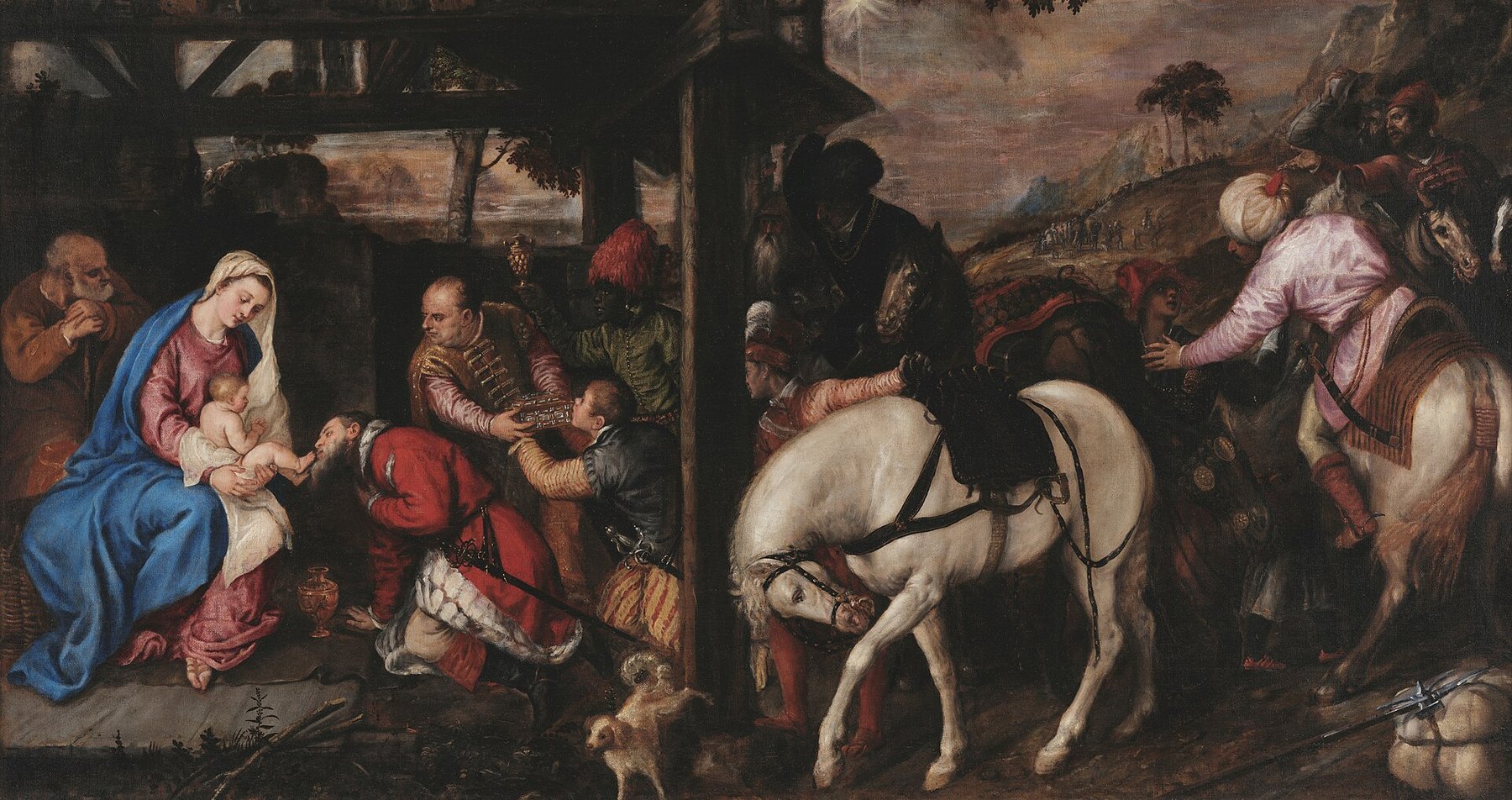
The Adoration of the Magi
c. 1560 · Oil on canvas · Pinacoteca Ambrosiana (Veneranda Biblioteca Ambrosiana), Milano
For the Epiphany · 6 January
Sizes
image 10×5.3 in on a 10×8 in sheet
What is dpi?
Dots per inch: how many pixels of the museum’s file go into each inch of paper. Our floor is 240 for sheets up to 20 inches, 180 up to 36 inches and 120 beyond, because a larger print is seen from further away. We never offer a sheet below the floor, and the number on each size is the one you receive.
Hahnemühle Photo Rag, 308 gsm cotton rag · pigment inks · printed to order
Printed to order · the whole painting, never cropped · if it arrives damaged, we replace it
Free shipping, included in the price, to all eight countries we ship to. Dispatched in 2–4 working days — nothing to send back if it arrives damaged.
Send as a gift
A printed card goes in the parcel with your message and the work’s museum record. No price is shown anywhere in the parcel. Enter the recipient’s address at checkout.
0 / 240Have a gift certificate?
The certificate’s balance is applied at checkout; any remainder is paid there. Check a balance or buy one.
Christmas: order by Monday 7 December for delivery in the United States before Christmas.
All editionsAbout this painting
A king kneels in red and bends to the Child, and the Child leans from His Mother's lap to meet him. Our Lady looks down at her Son, not at the king; Saint Joseph sits back in the shadow. Behind them the whole road has arrived: men carrying gifts, a white horse, a rider in a turban, and in the dirt a small dog. The Ambrosiana records that Cardinal Ippolito II d'Este ordered the painting as a present for Henry II of France and Diane de Poitiers, and that its frame carries their HD monogram among the crescent moons, bows and arrows of Diana. It never reached them. The dog, once painted over as irreverent, was later uncovered. Irenaeus read the myrrh as the gift for one who would die and be buried. Titian keeps the road behind them still arriving.
Sources: Mary read as pensive/sad, sensing the tragic destiny of her son; Christ Child blessing while gazing intently at the king, the compositional focus · Veneranda Biblioteca Ambrosiana, Pinacoteca Ambrosiana, masterpiece record, 'Adoration of the Magi — Titian' · Corroborated across Ambrosiana's page, thearkofgrace.com, and artsupp.com; traceable to Federico Borromeo, De pictura sacra (1624), trans. Kenneth S. Rothwell Jr. (I Tatti Renaissance Library, Harvard University Press, 2010) · Irenaeus of Lyons, Adversus Haereses (Against Heresies) III.9.2, Roberts–Donaldson translation
And entering into the house, they found the child with Mary his mother, and falling down they adored him: and opening their treasures, they offered him gifts; gold, frankincense, and myrrh.
Matthew 2:11 · Douay-Rheims (Challoner)