

Drag the print to move it. The painting is shown at true scale; where its shape differs from the sheet the print has a paper border, not drawn here. Prints are sold unframed, and a frame here is only for planning.
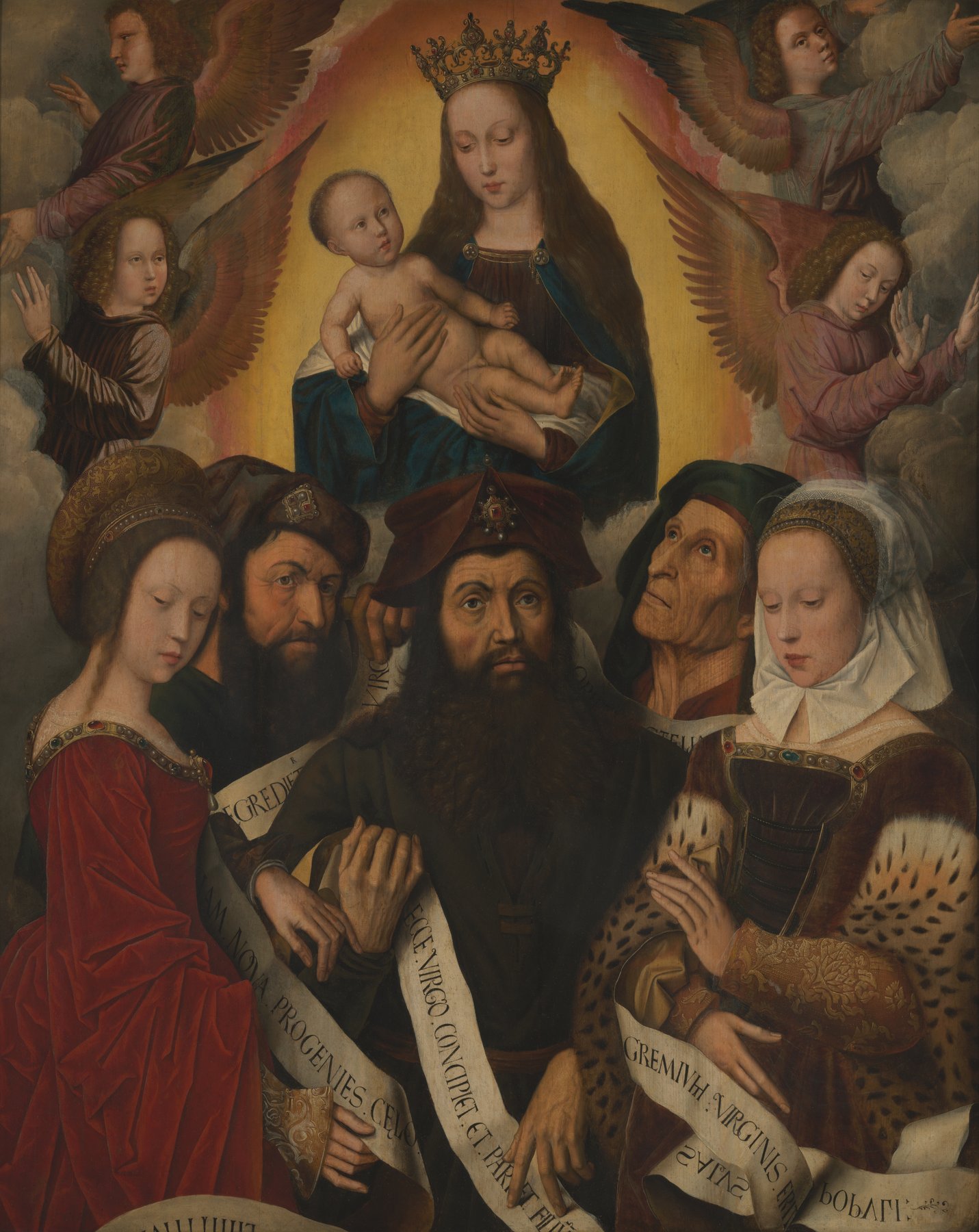
Deipara Virgo
1530 · oil on panel · KMSKA (Koninklijk Museum voor Schone Kunsten Antwerpen)
Sizes
image 8×10 in on a 8×10 in sheet
What is dpi?
Dots per inch: how many pixels of the museum’s file go into each inch of paper. Our floor is 240 for sheets up to 20 inches, 180 up to 36 inches and 120 beyond, because a larger print is seen from further away. We never offer a sheet below the floor, and the number on each size is the one you receive.
Hahnemühle Photo Rag, 308 gsm cotton rag · pigment inks · printed to order
Printed to order · the whole painting, never cropped · if it arrives damaged, we replace it
Free shipping, included in the price, to all eight countries we ship to. Dispatched in 2–4 working days — nothing to send back if it arrives damaged.
Send as a gift
A printed card goes in the parcel with your message and the work’s museum record. No price is shown anywhere in the parcel. Enter the recipient’s address at checkout.
0 / 240Have a gift certificate?
The certificate’s balance is applied at checkout; any remainder is paid there. Check a balance or buy one.
Christmas: order by Monday 7 December for delivery in the United States before Christmas.
All editionsAbout this painting
A pagan poet's line lies across a red skirt, beneath Our Lady, crowned, and the bare Christ Child. The woman at the left lets her ribbon fall there, one of a crowd of grave faces carrying words, and the KMSKA transcribes it: AM NOVA PROGENIES CELO. The line is Virgil's, from the Fourth Eclogue, which the Loeb renders as a new generation descending from heaven on high, just after the Virgin returns. The Princeton Dante Project notes that Dante took that Virgin for Astraea, Justice, and that the verse needed little rearranging to become a Christian prophecy. Ambrosius Benson letters the pagan's hope low, and sets its answer above.
Sources: KMSKA, Antwerp, 'Deipara Virgo', inv. 262, read 2026-09-24 · Virgil, Eclogues 4.4-10, Loeb Classical Library 63 (H. R. Fairclough trans.), read 2026-09-24 · Princeton Dante Project, commentary on Purgatorio XXII 70-72, read 2026-09-24 · Flemish Art Collection, Flemish Primitives, 'Deipara Virgo', read 2026-09-24