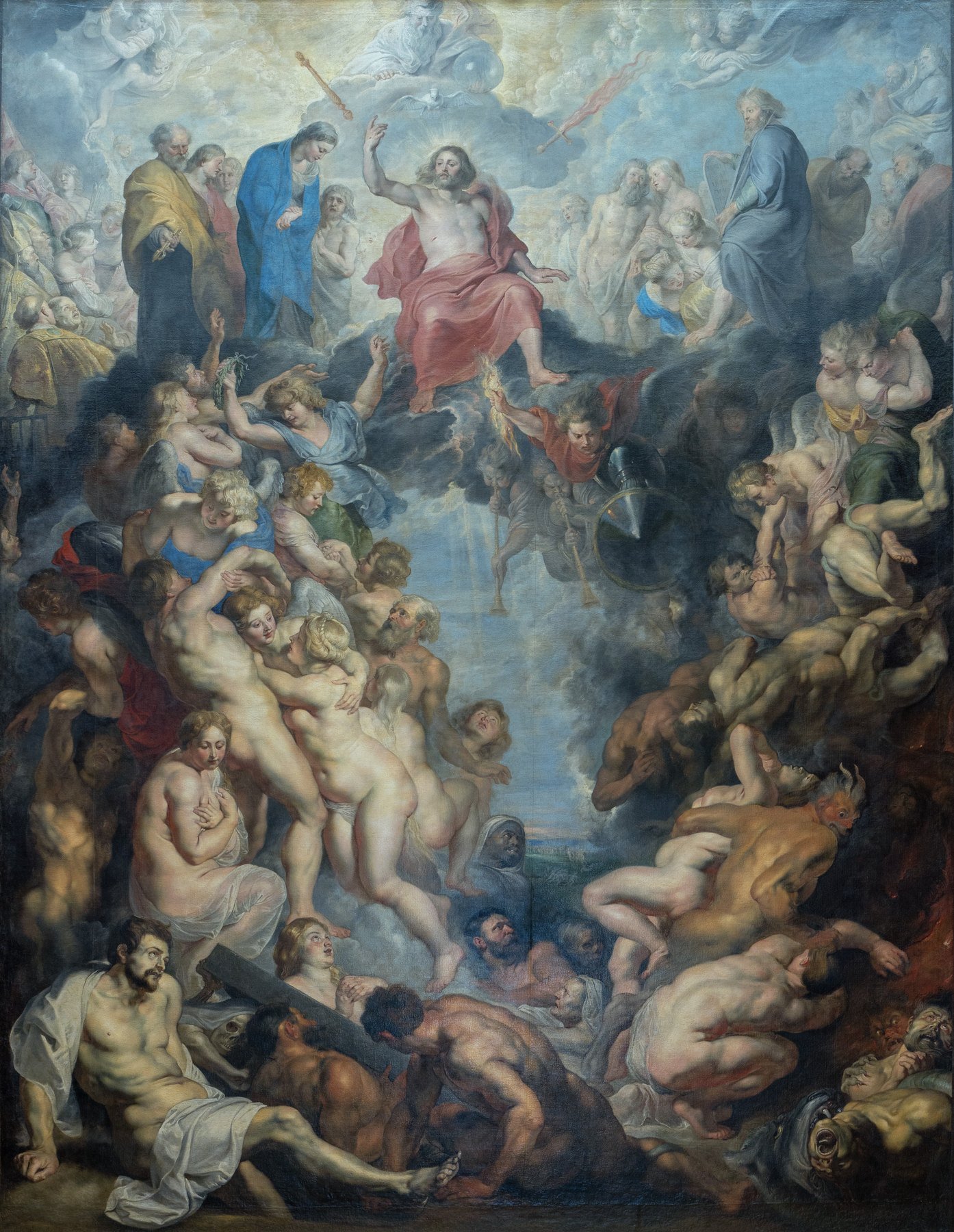
The Last Judgment
The original, as its museum records it
Every line above is reproduced from the holding institution’s own catalogue entry, which is linked. Where their title, date or attribution differs from ours, theirs is the one printed here.
The file this print is made from
Sizes
About this painting
We brought nothing into this world and can carry nothing out. Rubens takes it literally: the dead rise naked, and the one thing given is the crown of eternal life, which angels draw the blessed up to receive. Michael drives the rest into Hell.
Sandrart in 1675 called it the intercession of Our Lady with Christ, or rather the Last Judgment — his account could not decide between sentence and plea.
Wolfgang Wilhelm, a convert of 1613, ordered it for his court church at Neuburg. The nudities offended: curtained first, then taken down in 1653, the year he died.
Sources: Alte Pinakothek, Munich, Peter Paul Rubens, 'Das Große Jüngste Gericht', inv. 890. · Bayerische Staatszeitung, "Propaganda gegen Protestanten" · Historians of Netherlandish Art, review of Staatsgalerie Neuburg an der Donau: Flämische Barockmalerei · Joachim von Sandrart, 'Teutsche Academie' (1675), life of Rubens, Herzog August Bibliothek digital edition. · 1 Timothy 6:7, Douay-Rheims (Challoner).
And all nations shall be gathered together before him: and he shall separate them one from another, as the shepherd separateth the sheep from the goats:
Matthew 25:32 · Douay-Rheims (Challoner), from the project’s own corpus at data/bible_drc.js
Printed on demand. Public-domain masterwork, reproduced from a 5,000 px master of the original. The whole image is printed — never cropped to fit the sheet — so every sheet carries an archival margin, and the dimensions and resolution listed above are the ones you receive.