

Drag the print to move it. The painting is shown at true scale; where its shape differs from the sheet the print has a paper border, not drawn here. Prints are sold unframed, and a frame here is only for planning.
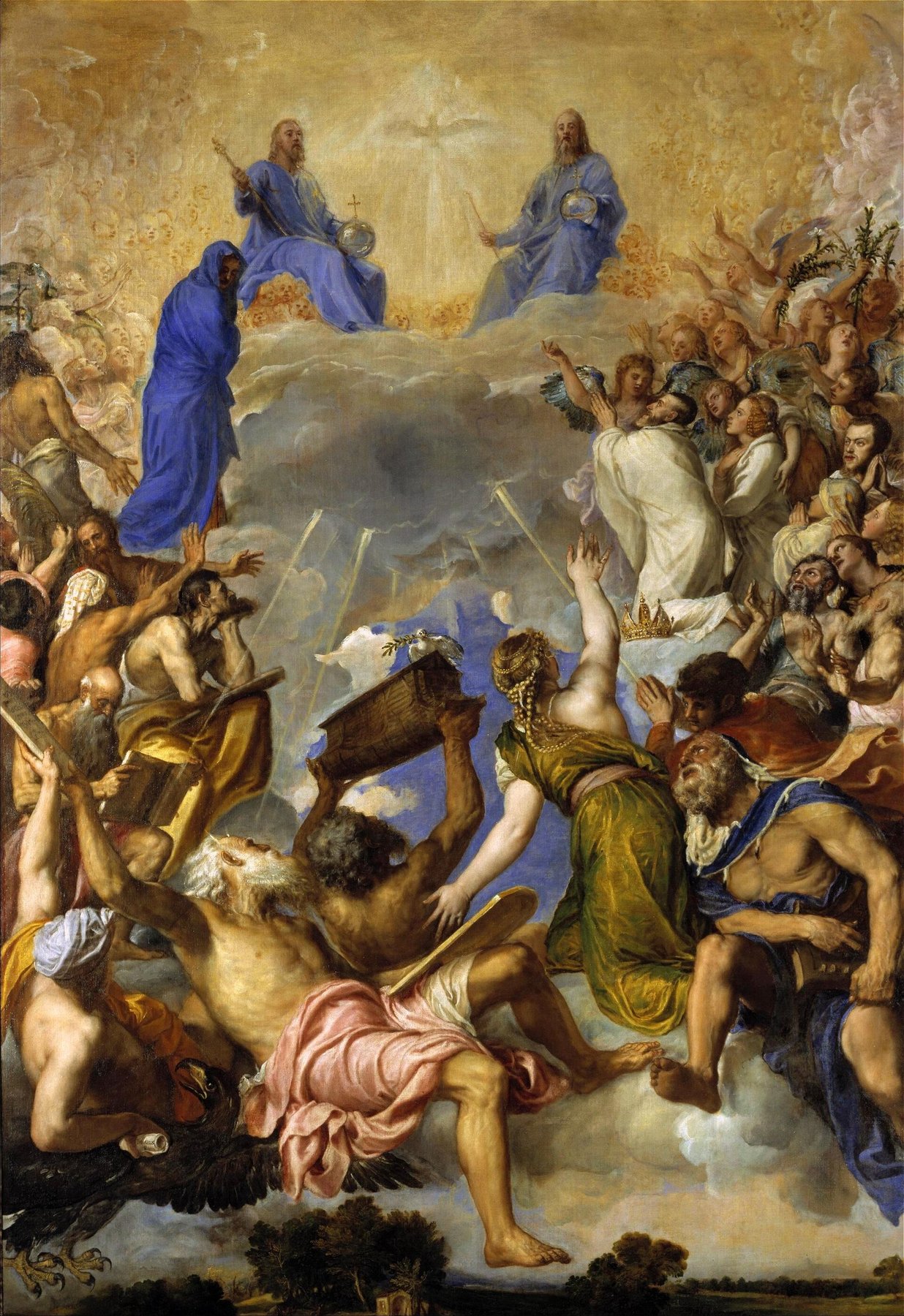
La Gloria (The Trinity in Glory)
1551–54 · Oil on canvas · Museo Nacional del Prado, Madrid
For Trinity Sunday
Sizes
image 6.9×10 in on a 8×10 in sheet
The museum’s file supports 8×10 in at 305 dpi; a larger sheet would fall below our floor.
What is dpi?
Dots per inch: how many pixels of the museum’s file go into each inch of paper. Our floor is 240 for sheets up to 20 inches, 180 up to 36 inches and 120 beyond, because a larger print is seen from further away. We never offer a sheet below the floor, and the number on each size is the one you receive.
Hahnemühle Photo Rag, 308 gsm cotton rag · pigment inks · printed to order
Printed to order · the whole painting, never cropped · if it arrives damaged, we replace it
Free shipping, included in the price, to all eight countries we ship to. Dispatched in 2–4 working days — nothing to send back if it arrives damaged.
Send as a gift
A printed card goes in the parcel with your message and the work’s museum record. No price is shown anywhere in the parcel. Enter the recipient’s address at checkout.
0 / 240Have a gift certificate?
The certificate’s balance is applied at checkout; any remainder is paid there. Check a balance or buy one.
Christmas: order by Monday 7 December for delivery in the United States before Christmas.
All editionsAbout this painting
A crown sits on a cloud, set down beside a kneeling man in a white shroud. Above him God the Father and Christ sit enthroned in blue, each with sceptre and globe, the Dove of the Holy Spirit in the light between them, and Our Lady comes toward them from the left. Charles V commissioned the work in person from Titian at Augsburg, and the Prado describes the imperial family kneeling barefoot in burial shrouds, the crown beside him rather than worn; only the Virgin walks toward the Trinity instead of gazing at it, in the same blue as the Father and the Son. The National Gallery in London calls such an epitaph a memorial for someone who has died. Titian finished in October 1554. The emperor set his crown down in paint two years before he set it down in fact.
Sources: Museo del Prado object page · National Gallery, London catalogue entry · The National Gallery, London, 'Charles V, Holy Roman Emperor'.